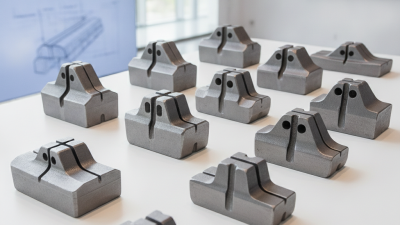
7 Best Bolted Rail Clips for Gantry Crane Runways
A gantry crane runway may look simple: parallel rails, steel supports, and moving wheels. Yet every bolt, washer, and clip influences alignment, stability, and maintenance access. The Bolted Rail Clip For Gantry Crane Runway is not merely a fastening accessory. It forms part of the runway’s load-transfer system.
Industry guidance supports this engineering view. CMAA Specification No. 70 addresses crane runway design, rail alignment, wheel loads, and operating conditions. OSHA 29 CFR 1910.179 also emphasizes safe crane construction, inspection, and maintenance. ISO 9927-1 reinforces the need for systematic crane inspections. Market analyses from Grand View Research and Mordor Intelligence continue to show strong demand for lifting equipment, driven by ports, warehouses, steel plants, and infrastructure projects. That growth increases the need for dependable rail connections.
Dr. Uwe Peil, a recognized structural-engineering researcher in crane runway behavior, has stated, “A runway connection must be designed as part of the structure, not treated as an accessory.” The principle is easy to remember. Details matter.
This guide compares seven bolted rail clips for gantry crane runways. It considers rail profile compatibility, bolt-grade options, adjustment range, clamping force, installation space, corrosion protection, and inspection practicality. A clip that looks strong may still fail when thermal movement, repeated wheel impact, or uneven support enters the calculation. That is the uncomfortable part.
Real sites are rarely perfect. Dust gathers beneath base plates. Paint hides corrosion. Bolts loosen slowly. Therefore, the best choice is not always the heaviest clip. It is the clip that matches the rail, runway structure, operating duty, and maintenance plan with measurable confidence.
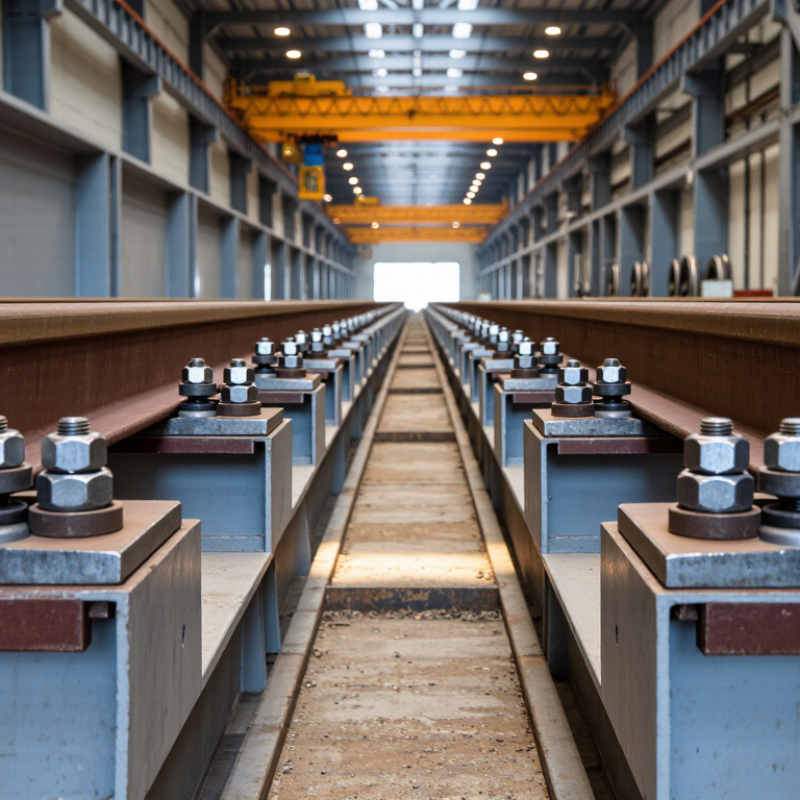
Define Gantry Runway Requirements Using EN 13001 Wheel-Load Combinations
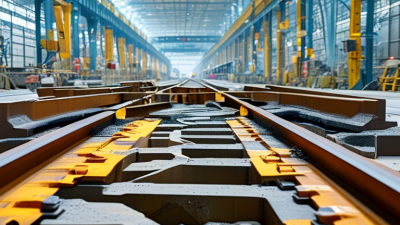
A reliable gantry runway begins with realistic wheel-load combinations, not a rail clip catalogue. Use EN 13001 to define vertical wheel forces, lateral guidance forces, longitudinal effects, and relevant dynamic amplification. Check each wheel position, crane duty, span condition, and braking event.
The resulting reactions should guide rail seat pressure, clip preload, bolt tension, and fatigue checks. Static wheel loads alone can understate movement at joints and end stops.
For the seven best bolted rail clip characteristics, look for:
adjustable alignment
stable preload
adequate shear resistance
fatigue-tested geometry
strong bearing surfaces
corrosion protection
simple inspection access
The clip must restrain the rail without locking normal thermal movement. Bolts need controlled tightening, suitable washers, and enough thread engagement. Rail support should remain continuous under the largest design combination.
Field experience often shows a weak detail at the rail joint, not in the clip body. That deserves attention.
Tips: Record wheel loads, crane class, rail profile, support spacing, and braking assumptions before selecting hardware.
Recheck the design with the current EN 13001 edition and applicable national requirements. Inspect loose bolts, fretting marks, crushed pads, and polished contact areas during maintenance.
Do not assume an apparently oversized clip solves poor rail seating. Installation tolerances can change the load path.
A second calculation is worthwhile.
Classify Bolted Rail Clips for DIN 536 Rail Profiles and Flange Dimensions
7 Best Bolted Rail Clips for Gantry Crane Runways
Classifying bolted rail clips starts with the DIN 536 rail profile, not the clip catalogue. DIN 536-1 defines crane rail geometry, including head width, rail height, foot width, and web thickness. For example, A45 and A55 rails require different seating widths and bolt clearances. A clip must match the rail foot flange, not only the nominal rail size. The correct fit prevents sideways movement and reduces local contact stress.
The seven practical clip classes are fixed, adjustable, heavy-duty, insulated, slotted, paired, and weld-free bolted types. Fixed clips suit stable flange dimensions. Adjustable clips tolerate minor installation variation. Insulated designs help separate the rail electrically from the runway beam. Slotted clips are useful where thermal movement requires controlled adjustment. Heavy-duty and paired clips suit higher wheel loads, but their capacity must be checked against bolt grade and tightening torque.
Use measured dimensions. Always.
The European Federation for Materials Handling FEM 1.001 recommends checking wheel loads, impact effects, and runway alignment during crane design. ISO 4301-1 also classifies crane duty groups, which influence fatigue exposure and fastening selection. Industry inspection guidance commonly treats rail fasteners as safety-critical components, especially where repeated wheel passage causes loosening. In practice, I would verify the flange thickness with a caliper, then confirm bolt edge distance and washer seating. A clip that fits on paper may still rock under load. That mistake is easy to miss.
Verify Bolt Grades, Preload, Torque, and Slip Resistance During Maintenance
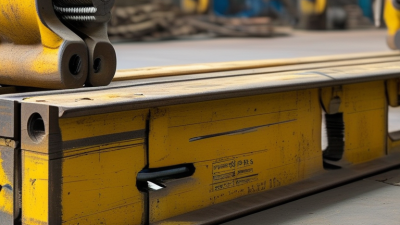
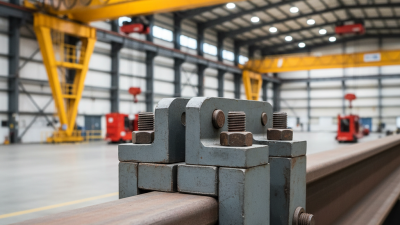
For gantry crane runways, the best bolted rail clips are not judged by shape alone. A practical shortlist includes forged clips, adjustable clips, serrated clips, insulated clips, heavy-duty clips, low-profile clips, and replacement-friendly clips. Each must suit the rail section, wheel loads, and runway steelwork.
During maintenance, verify the bolt grade against approved drawings and the clip supplier’s data. Do not guess from bolt color. Check markings, thread condition, washers, and nut engagement. Preload matters more than a torque number alone. Use a calibrated torque wrench, clean threads, and the specified lubrication condition. Lubrication can change the achieved preload dramatically. That detail is easy to miss.
Torque records should identify each rail zone, bolt size, tool, and inspection date. Apply torque gradually and use a cross-pattern where the connection design requires it. Check for fretting dust, cracked paint, shifted witness marks, and elongated holes. These signs may indicate slip before visible rail movement appears. Measure lateral rail position with a fixed reference, not by eye. Slip resistance depends on clamp force, friction, contact surfaces, and vibration. A clip can feel tight yet perform poorly. I have seen maintenance plans focus on torque while ignoring contaminated contact surfaces. That approach needs reconsideration. Where movement is suspected, stop relying on retightening alone. Request an engineering assessment and document the measured condition.