Top 10 Railway Frog Types for Global Buyers to Consider
In the global railway industry, the importance of selecting the right components cannot be overstated. Railway frogs, essential for track intersections, greatly impact efficiency and safety. Reports indicate that improper or low-quality frogs can lead to increased maintenance costs and operational delays. The right railway frog can enhance stability and improve train flow, making it crucial for buyers to make informed choices.
Various types of railway frogs are available on the market, each serving unique requirements. Factors such as material quality, design, and environmental compatibility must be considered. Data from recent industry studies highlight that high-quality railway frogs can reduce wear and tear on both tracks and rolling stock. However, there is often confusion regarding which type best suits varying operational contexts. Buyers must reflect on the specific needs of their railway systems to avoid costly mistakes.
Understanding these elements can empower global buyers in their purchasing decisions. The railway industry thrives on reliability, where each component plays a pivotal role. Therefore, recognizing the distinct characteristics of different railway frog types is essential for achieving operational excellence and ensuring safety on the tracks.
Overview of Railway Frogs and Their Importance in Rail Systems
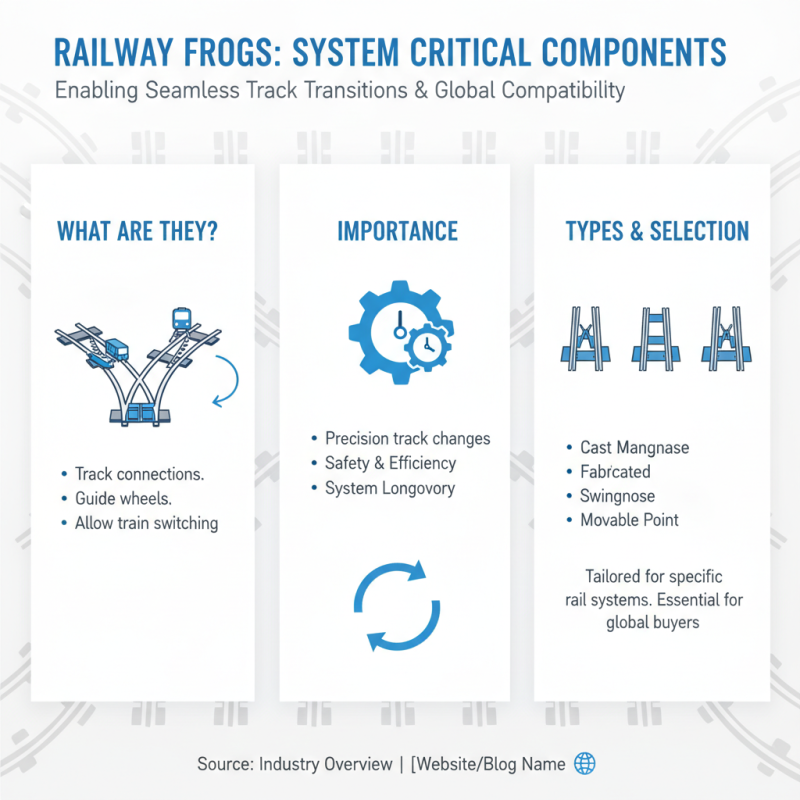
Railway frogs play a crucial role in rail systems, providing the necessary connections between tracks. They enable trains to switch from one track to another with precision. Each frog type has unique characteristics tailored for different railway systems. Understanding these differences is key for global buyers.
The design of railway frogs can vary significantly. Some frogs are made with high-strength steel, offering durability under heavy loads. Others may be equipped with advanced features to reduce noise and vibrations. This diversity allows railways to optimize performance based on their specific needs. However, the choice of a frog type isn't always straightforward. Factors like traffic patterns and weather conditions can complicate decisions.
Accessibility is another important consideration. Buyers should evaluate the availability of maintenance services for specific frog types in their regions. This factor can directly impact the long-term performance of the railway system. In some cases, buyers may overlook local support and face issues later. It's essential to conduct thorough research to ensure the right fit for operational efficiency.
Key Features to Consider When Selecting Railway Frog Types
When selecting railway frogs, understanding their key features is essential. Railway frogs are critical for track integrity. The design affects how trains transition between tracks. A common type is the cast iron frog, known for durability. Generally, they come in varying sizes and shapes, tailored for specific rail conditions.
Material choice is vital. Steel frogs are resilient and suited for heavy loads. Composite materials offer weight savings and resistance to corrosion. Performance under different weather conditions must also be considered. For example, plastic frogs might not withstand extreme temperatures.
Pay attention to maintenance needs as well. Some frogs require frequent inspections to ensure safety. Others can endure wear longer, reducing downtime. A less durable option could lead to increased repair costs. It is wise to weigh these factors carefully. Each type has strengths and weaknesses, and balancing them is critical for effective rail management.
Top 10 Railway Frog Types: Specifications and Applications
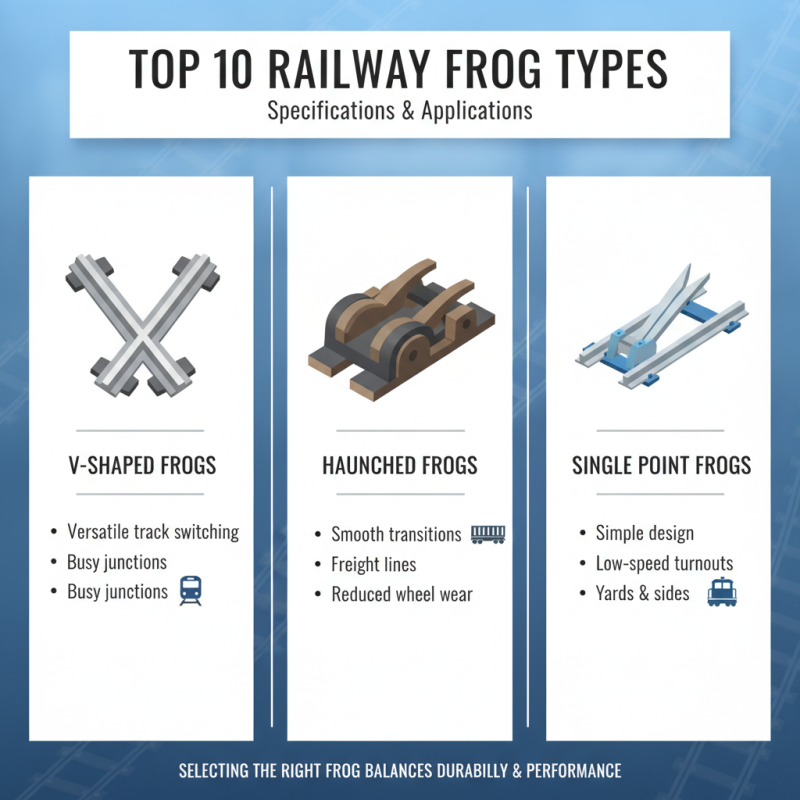
When selecting railway frogs, specifications and applications vary significantly. Each type serves a unique purpose. The most common frogs include V-shaped, Haunched, and Single Point designs. V-shaped frogs are versatile, allowing trains to switch tracks efficiently. They are often found in busy junctions. On the other hand, Haunched frogs provide smooth transitions, ideal for freight lines. Their design reduces wear on wheels, balancing durability and performance.
Applications differ by region and use case. In urban areas, quick and efficient track changes are vital. Thus, V-shaped frogs are heavily utilized. Freight lines prioritize strength. Therefore, Haunched frogs are preferred in these settings. Single Point frogs, while less common, are essential in specific scenarios, especially where space is limited. They allow for compact designs but require careful installation to avoid derailments.
Despite their importance, many buyers overlook certain aspects. The choice of materials can affect longevity. Steel frogs may offer strength but require more maintenance. Composite materials reduce upkeep but may not withstand heavy loads. Buyers must evaluate their specific needs carefully. Each option has trade-offs, making it crucial to understand the context of use. A thoughtful approach can lead to better decision-making.
Comparative Analysis of Global Railway Frog Manufacturers
When exploring the global railway frog market, a comparative analysis of manufacturers offers valuable insights. Railway frogs play a crucial role in track connectivity. They ensure smooth transitions between differing track segments, making their design and quality vital for safety and efficiency.
Different manufacturers emphasize various aspects of frog design. Some focus on durability and resistance to wear, while others prioritize quick installation features. Examining their production techniques reveals interesting contrasts. For instance, several manufacturers adopt advanced material sciences, improving product lifespan and performance. However, not all companies maintain the same level of quality control. This inconsistency can pose challenges for buyers seeking reliable options.
Additionally, the global market presents opportunities and complexities. Differences in industry standards across regions can lead to varying product specifications. Buyers must carefully assess these factors. In some cases, local suppliers may lack the same technological advancements found in international firms. Thus, it is essential to weigh experience and trustworthiness when selecting suppliers. In this evolving landscape, staying informed can help buyers make better choices.
Top 10 Railway Frog Types for Global Buyers to Consider
| Type |
Material |
Weight (kg) |
Load Capacity (ton) |
Manufacturing Country |
Average Price ($) |
| Frog Type A |
Steel |
150 |
40 |
USA |
1200 |
| Frog Type B |
Cast Iron |
200 |
50 |
Germany |
1500 |
| Frog Type C |
Aluminum |
120 |
35 |
France |
1300 |
| Frog Type D |
Steel |
180 |
45 |
China |
1100 |
| Frog Type E |
Composite |
100 |
30 |
Italy |
1400 |
| Frog Type F |
Steel |
160 |
42 |
Japan |
1350 |
| Frog Type G |
Cast Iron |
220 |
55 |
India |
1600 |
| Frog Type H |
Aluminum |
140 |
38 |
South Korea |
1250 |
| Frog Type I |
Composite |
110 |
33 |
Brazil |
1150 |
| Frog Type J |
Steel |
190 |
48 |
Australia |
1300 |
Trends and Innovations in Railway Frog Design and Technology
Innovations in railway frog design are transforming the industry. With advancements in materials and technology, frogs are becoming lighter and more durable. Engineers are now using advanced composites that reduce maintenance needs. These materials resist wear and tear from constant train traffic, extending the life of the infrastructure.
One notable trend is the incorporation of smart technology. Sensors embedded in frogs provide real-time data on wear and performance. This allows for predictive maintenance, which minimizes disruptions. However, integrating such technology can pose challenges. The initial costs and the need for specialized skills create complexities for many operators.
Moreover, sustainability is becoming a critical focus. Eco-friendly materials and manufacturing processes are being adopted. This shift reflects the industry's commitment to reducing its carbon footprint. Yet, sourcing sustainable materials can be difficult. Balancing cost-effectiveness and environmental responsibility remains an ongoing challenge for stakeholders.