| Rail Material |
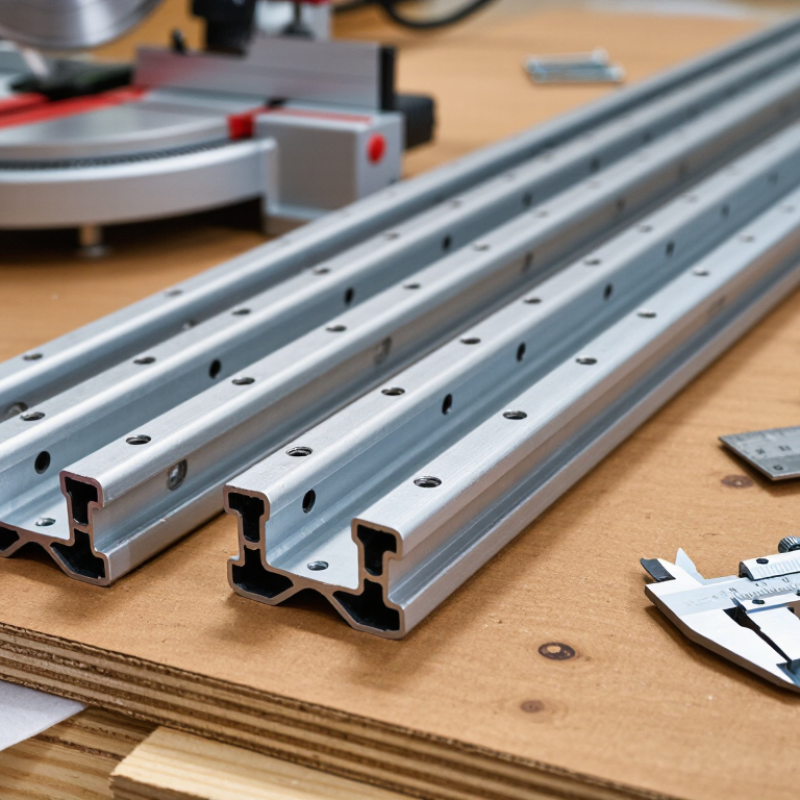
Extruded aluminum alloy for low weight and corrosion resistance; hardened or coated steel for heavy-duty applications. |
Material selection affects stiffness, portability, wear resistance, and long-term dimensional stability. |
Request the material grade, mill certificate, coating specification, and a cross-sectional drawing. |
Aluminum alloy designations should follow the applicable national or international material system; steel grades should be fully identified on the drawing and purchase order. |
Approve only when the declared material matches the technical drawing. |
| Rail Length |
Common practical lengths include approximately 600 mm, 800 mm, 1,000 mm, 1,400 mm, and 1,900 mm, depending on the workpiece and saw base. |
A rail that is too short may not support the complete cut; an excessively long rail can increase transport cost and deflection risk. |
Measure the usable guide length and confirm the required cutting capacity with the production sample. |
Use a buyer-approved drawing specifying overall length, usable length, end features, and allowable tolerance. |
Select the shortest rail that fully supports the required cut length. |
| Straightness |
For precision woodworking applications, a practical target is approximately 0.5 mm or less over 1,000 mm; tighter requirements should be specified for professional systems. |
Rail curvature can cause the saw to drift, produce a non-square cut, or create a visible gap at the joint. |
Check with a calibrated straightedge, granite surface, feeler gauges, or a coordinate measuring system. |
Geometrical tolerances may be specified using ISO 1101 principles; general tolerances may reference ISO 2768 where appropriate. |
Reject rails that exceed the agreed straightness limit. |
| Flatness of the Contact Surface |
Specify a continuous, burr-free contact surface with no rocking; a typical buyer target is no visible rocking and no local gap above the agreed feeler-gauge limit. |
Flatness determines whether the rail remains stable on the panel or workbench during an angled cut. |
Place the rail on a certified flat surface and inspect with feeler gauges and a dial indicator. |
Geometrical tolerancing should be stated on the engineering drawing in accordance with ISO 1101 principles. |
Require a flatness report for precision or large-format rails. |
| Dimensional Tolerance |
Use individually defined tolerances for critical features such as guide width, track height, slot width, and connector locations; avoid relying only on an unspecified general tolerance. |
Small dimensional errors can cause binding, excessive play, or incompatibility with the saw carriage and accessories. |
Check critical dimensions with calibrated digital calipers, micrometers, gauges, or a coordinate measuring machine. |
ISO 2768 may be used for suitable non-critical dimensions; tighter dimensions should be individually toleranced. |
Do not accept a quotation based only on “standard tolerance.” |
| Joint Alignment for Multiple Rails |
Connector ends should maintain alignment with minimal height offset and lateral mismatch after assembly. |
Misaligned joints can interrupt the saw base and create a step that affects cut quality and safety. |
Assemble two or more rails and check the joint with a straightedge, dial indicator, and test carriage. |
Define the maximum joint step and lateral offset on the purchase specification. |
Approve only after a fully assembled joint test. |
| Guide-Strip or Glide-Surface Fit |
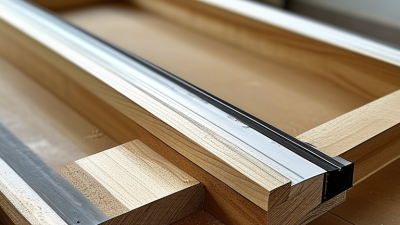
Guide strips should be continuous, securely bonded or mechanically retained, and free from lifting edges, wrinkles, and gaps. |
The glide surface controls carriage movement and helps prevent scratches or lateral movement during cutting. |
Perform a full-length visual inspection, hand-feel inspection, and repeated carriage travel test. |
Use an approved inspection checklist covering adhesion, surface continuity, and replacement availability. |
Require replacement strips and defined spare-part availability for repeat orders. |
| Anti-Slip Surface |
Rubber or elastomer strips should provide stable contact without excessive residue, deformation, or premature hardening. |
Reliable grip reduces rail movement and lowers the need for clamps during miter cuts. |
Test on the intended board materials under dry conditions and repeat after cleaning and temperature exposure. |
No single universal friction value applies; define the test surface, load, angle, and acceptance limit in the purchase specification. |
Use a sample-based slip test before mass production. |
| Miter-Angle Accuracy |
For a precision system, specify the required angular accuracy, such as ±0.1° or ±0.2°, according to the product application. |
Angular error becomes more visible when two components are joined at 45° or another compound angle. |
Use a calibrated digital angle gauge, certified square, or optical measurement equipment on a representative workpiece. |
Specify the measurement method, reference surface, temperature, and acceptance limit; do not use an angle value without a test method. |
Approve based on measured cutting results, not only rail appearance. |
| Carriage Compatibility |
The rail profile, guide channel, and carriage interface must match the saw base or cutting accessory without binding or excessive play. |
Compatibility affects smooth travel, cut accuracy, and operator control. |
Run the actual or approved equivalent carriage over the complete rail length and inspect for sticking, rocking, and side play. |
Use a controlled interface drawing with all mating dimensions and allowable clearance values. |
Do not rely on photographs or nominal width alone. |
| Surface Finish and Burr Control |
All accessible edges should be deburred; contact and guide surfaces should be smooth and free from dents, deep scratches, sharp edges, and embedded chips. |
Burrs can damage guide strips, interfere with carriage movement, or injure the operator. |
Perform visual inspection, glove or cotton-swab inspection, and roughness measurement where a controlled finish is required. |
Surface roughness limits should be stated on the drawing when functionally important; general workmanship criteria should be included in the quality agreement. |
Include a zero-sharp-edge requirement for all user-accessible areas. |
| Anodizing or Protective Coating |
For aluminum rails, specify coating type, color, thickness range, adhesion, and resistance to handling marks; for steel rails, specify plating or paint system. |
Protective treatment improves corrosion resistance and preserves the sliding surface and appearance. |
Check coating thickness with a suitable gauge, adhesion using an approved method, and surface coverage under controlled lighting. |
Coating requirements may reference ISO 7599 for anodized aluminum or ISO 2409 for paint adhesion, where applicable. |
Request coating-process records for repeat production. |
| Corrosion Resistance |
Specify the required environment and test duration; salt-spray testing should be used only when relevant to the final coating and application. |
Corrosion can increase friction, stain workpieces, and reduce the life of connectors and guide surfaces. |
Review material and coating records, then conduct an agreed corrosion test on representative samples. |
Neutral salt spray may reference ISO 9227, but the acceptance criteria must be defined in advance. |
Do not treat a salt-spray hour rating as a universal service-life prediction. |
| Load and Deflection |
Specify the maximum distributed and point load, supported span, and maximum allowable deflection for the intended rail length. |
Deflection may change the cut line when the rail is used on large panels or with heavy equipment. |
Apply the specified load at defined positions and measure deflection with a dial indicator or laser displacement device. |
Use a buyer-defined load test because rail geometry, support spacing, and use direction strongly affect results. |
Require a load-deflection report for long or heavy-duty rails. |
| Repeatability of Production |
Critical dimensions and functional results should remain within the approved tolerance across samples from different production batches. |
Consistent repeatability is more important than the performance of a single sample. |
Use first-article approval, in-process inspection, final sampling, and batch traceability. |
Sampling plans may reference ISO 2859-1; the inspection level and acceptable quality limit must be agreed before production. |
Link each inspection record to a production batch or lot number. |
| Packaging and Transport Protection |
Use rigid protection against bending, impact, moisture, and abrasion; long rails should be supported at multiple points inside the package. |
Even a dimensionally accurate rail can arrive unusable if it bends or suffers impact damage during transport. |
Inspect packaging strength, corner protection, moisture barriers, and the rail condition after a controlled shipment trial. |
Packaging and export-marking requirements should be stated in the purchase order; wood packaging may require ISPM 15 compliance. |
Make transport damage and replacement responsibility explicit in the contract. |
| Documentation and Traceability |
Required documents should include approved drawings, material declarations, inspection reports, coating records, batch identification, and user instructions. |
Traceable records make it easier to resolve quality claims and maintain consistent repeat orders. |
Audit the document package before shipment and verify that report values correspond to the delivered lot. |
Quality-management systems may be assessed against ISO 9001, but certification does not replace product-specific inspection. |
Release payment or shipment only after the agreed documents are complete. |