What is Continuous Rail and How Does it Work in Modern Transportation?
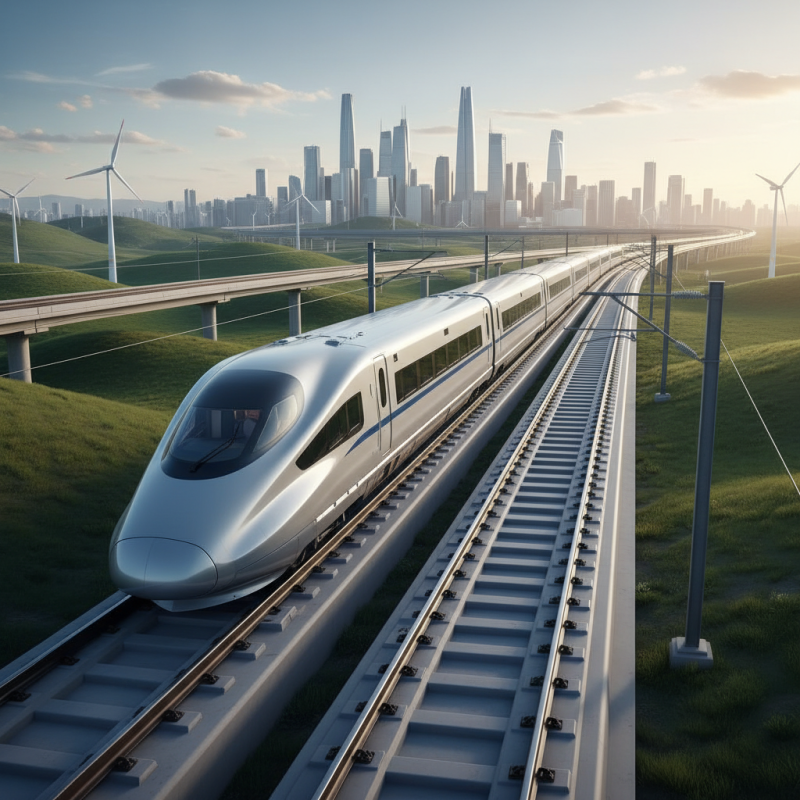
Continuous Rail is transforming modern transportation. This advanced system minimizes joint gaps, allowing trains to travel smoothly. As experts suggest, it enhances safety and efficiency significantly. Dr. Emily Carter, a leading figure in rail engineering, once noted, "Continuous Rail technology will redefine the future of train systems."
In regions adopting Continuous Rail, train speeds have notably increased. The seamless design reduces wear and tear on equipment. Tracks are less prone to defects, ensuring a reliable service. However, not all regions have embraced this advancement. Some struggles remain in funding and implementation.
There’s a learning curve with Continuous Rail. Maintenance practices need an upgrade. Safety protocols must adapt to this new technology. Rail companies face challenges in integrating this system nationwide. Continuous Rail offers promise, yet requires thoughtful reflection on its integration.
What is Continuous Rail?
Continuous rail refers to a seamless track system used in modern railways. Unlike traditional railways that utilize joints, continuous rail is a single, uninterrupted length of metal. This design reduces noise and vibrations, creating a smoother ride. It's often made of steel and can stretch for miles without breaks.
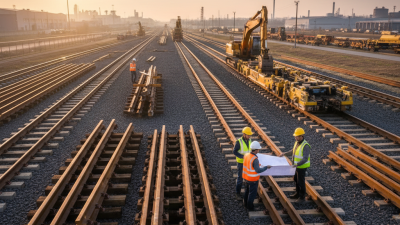
In practice, continuous rail requires precise installation and regular maintenance. Shifts in temperature can cause the metal to expand or contract, leading to potential buckling. Engineers must monitor these changes and make adjustments accordingly. Despite its advantages, the reliance on continuous rail presents challenges. The cost of implementation can be high, and any defects in the rail can affect long stretches.
As rail systems evolve, designing and managing continuous rail becomes more complex. Innovations are ongoing, yet there's room for improvement. Balancing efficiency with safety will always be an ongoing conversation. Continuous rail has promise, but it also highlights the importance of designing sustainable transportation systems.
History and Evolution of Continuous Rail Technology
The concept of continuous rail dates back to the mid-19th century. Initially, railways used individual rail segments. This method had many joints, causing wear and instability. Engineers sought solutions. They aimed to create smoother rides and reduce maintenance needs. Continuous rail emerged from their efforts. This technology allowed for longer rail sections, enhancing durability.
As rail systems grew, continuous rail became essential. The shift represented a major evolution in transportation. Trains could travel faster and safer on long, uninterrupted tracks. However, challenges remained. Installing continuous rail requires precise alignment. Misalignment can lead to derailments. Some earlier projects faced issues with track durability over time.
Despite advancements, the execution of continuous rail is not flawless. Some installations still experience problems. Weathering effects can cause rail expansion or contraction. This introduces potential hazards. Engineers are constantly seeking improvements. They analyze performance data to refine installation techniques. Continuous rail technology continues to evolve, reflecting the industry's growth and innovation.
Evolution of Continuous Rail Technology Over the Decades
This bar chart illustrates the key developments in continuous rail technology from the 19th century to the present. It highlights significant milestones that contributed to the efficiency and safety of modern rail transportation.
Components and Structure of Continuous Rail Systems
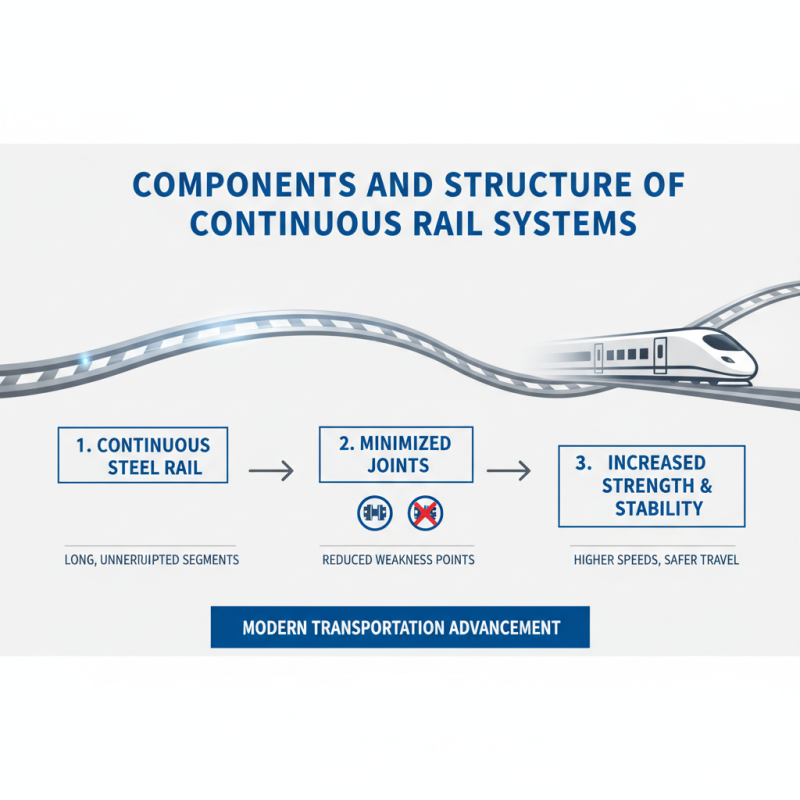
Continuous rail systems are a significant advancement in modern transportation. They consist of long, uninterrupted segments of steel rail. This design minimizes joints, which traditionally can be points of weakness. By using continuous steel, the overall strength of the rail increases. As a result, trains can travel at higher speeds while maintaining stability.
The structure of continuous rail systems includes several essential components. Continuous welded rail (CWR) is a key element. It's formed by welding rails together. The rail anchors and fasteners secure the rail to the ties. These components work in concert to absorb vibrations and maintain alignment. However, the stability of these systems can be challenged by temperature fluctuations. Rails expand and contract, which can lead to buckling if not properly managed.
Maintenance remains a critical aspect of these systems. Regular inspections can identify wear and tear early. Track geometry must be monitored closely. If changes occur, corrective action is necessary to avoid accidents. While continuous rail systems offer many advantages, they require careful planning and execution. Maintaining safety should always be a priority in these advanced transportation networks.
Advantages of Continuous Rail in Modern Transportation
Continuous rail systems provide significant advantages in transportation. They enhance efficiency and improve safety. Reports show that these systems reduce maintenance costs by up to 20%. This is critical for the sustainability of rail networks. Fewer joints mean fewer weak points, leading to a more robust infrastructure.
Furthermore, continuous rail reduces vibrations and noise. This is beneficial for both passengers and surrounding communities. According to a recent study, noise levels can drop by 15% with continuous rail. However, the transition to this system can be challenging. The initial investment is higher, which may deter some projects.
Another point to consider is that while continuous rail enhances speed and reliability, it requires careful planning. Improper installation can lead to issues such as rail buckling. Regular monitoring is essential to maintain performance. Despite these challenges, the benefits often outweigh the drawbacks in modern transportation systems.
Applications and Future Developments of Continuous Rail
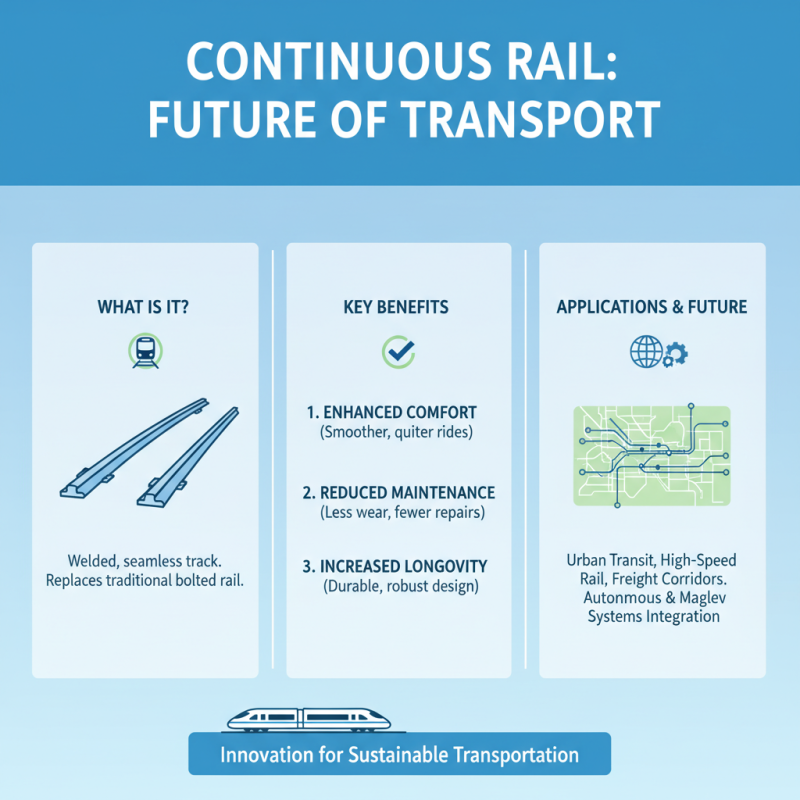
Continuous rail, also known as welded rail, is becoming vital in modern transportation systems. Its seamless design enhances ride comfort and reduces maintenance. This innovation is prevalent in urban transit and high-speed rail networks. Trains glide more smoothly over continuous rail segments, minimizing wear and tear on tracks. The result is a quieter ride for passengers in bustling cities.
Applications for continuous rail extend beyond passenger transport. Freight systems also benefit from its durability. Continuous rail allows heavy goods trains to operate more efficiently. However, the installation process can be challenging and costly. Uneven ground or existing infrastructure can complicate the integration.
Future developments in continuous rail technology may focus on smart tracks. These could monitor wear in real-time, alerting operators to potential issues. This advancement might improve safety and reduce unexpected downtimes. Yet, there remains uncertainty regarding the adoption of such technologies. Balancing cost and innovation is essential. As we move forward, continuous rail will play a crucial role in shaping transportation's future.